
When the Thai traveler @Loi Story flew all the way here just to wait for birds at dusk along the mouth of the Yellow River, autumn and winter in Shandong are no longer off-season. From the "Kunpeng" bird waves near Dongying to the swans and the snow-covered shipwreck in Rongcheng, from the seagulls at Qingdao's Zhanqiao Pier to the snowfall—one that can only be encountered by flying across the equator—and the sunrise atop Mount Tai: this season turns winter in Shandong into a limited-edition natural feast.
Hundreds of thousands of migratory birds surge and gather in the airspace above the mouth of the Yellow River: they converge like the giant mythical kun fish and disperse like a long river. This area is a crucial hub along the "East Asia–Australasia" migratory bird flyway; flocks of Baer's pochards here once exceeded 240,000 birds. In the winter of 2025, the topic "There Are Fish in the Northern Sea" garnered over 1 billion views online, and the six bird-watching sites collectively received approximately 400,000 visitors. The best time for observation is from October through mid-to-late December; the birds are most easily spotted 10–20 minutes after sunset, and the Dongba Road Wetland Viewing Platform is the best spot. Please observe from a distance and appreciate the birds quietly: do not chase them, do not disturb them, and do not use drones.
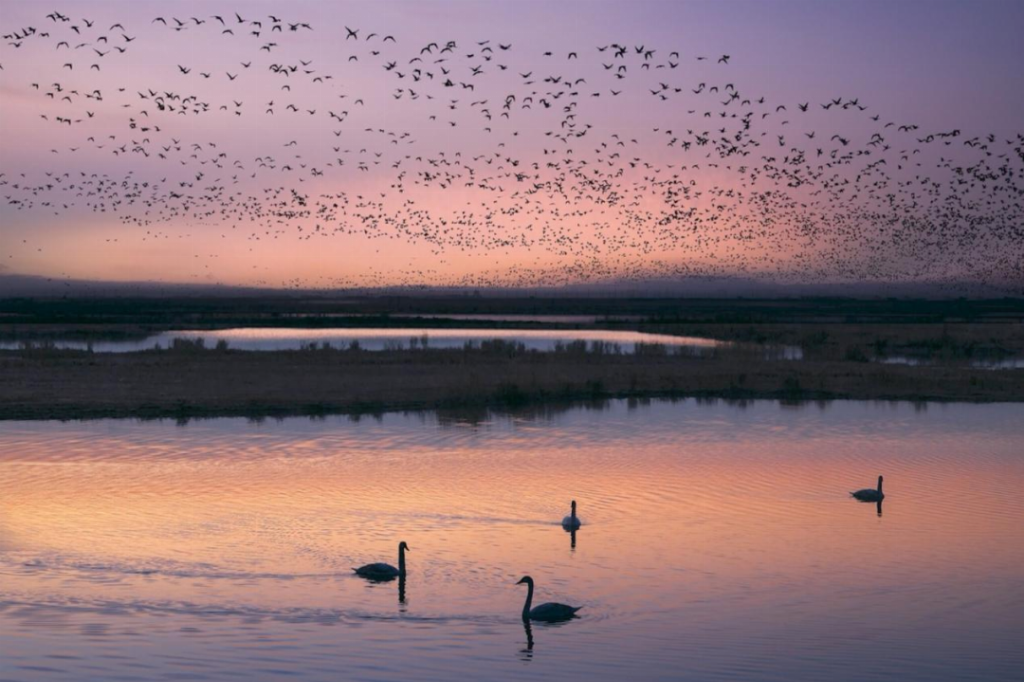
Photo by Cai Jin
Rongcheng, known as "China's Hometown of Whooper Swans," sees tens of thousands of whooper swans travel from Siberia each year between October and March. At Swan Lake, Yandunjiao, and Cherry Blossom Lake, the scene is one of "a pool of snow-white splendor." The country's first dedicated swan-watching train has been launched, making it more convenient to admire the swans. Even more striking is the Blueways shipwreck after a snowfall—the rusty giant ship lies nestled between the white snow and the waves, with gulls circling overhead; a casual snapshot could easily look like a movie poster. Then soak in an outdoor hot spring amid falling snow and watch the rising steam dance with snowflakes—a romantic experience unique to Weihai in winter.
In winter, Qingdao welcomes seagulls that fly in from Siberia to keep their appointment. Scatter a handful of feed beside Zhanqiao Pier, and snow-white wings will glide across the century-old maritime promenade; the warm lights along the old streets of Zhongshan Road and the foam of bagged draft beer infuse even the sea breeze with the warmth and vitality of everyday life.
For travelers from Singapore, Malaysia, Thailand, and Indonesia, snow is something one must cross the equator to encounter. The last remaining equatorial glacier on Indonesia's Puncak Jaya (Carstensz Pyramid) is melting; in the other three countries, frost occurs year-round, but snow does not. In Shandong, however, winter brings a genuine snowfall: Laoshan and Mount Tai are transformed into silver landscapes overnight, and steam from hot springs meets snowflakes in the air. For someone accustomed to temperatures of around 30 degrees Celsius year-round, stepping into the snow, molding a snowball, and listening to the "crunch" beneath your feet would be the most luxurious experience. This white invitation is only extended in the winters of northern China.
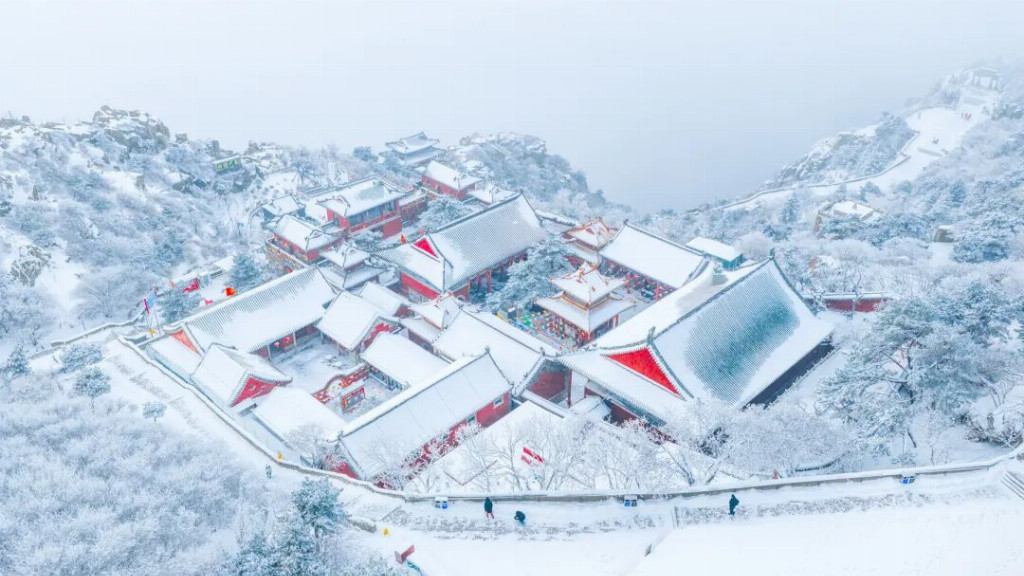
In the early hours of the morning, Mount Tai is illuminated by headlamps that form a river of stars. After enduring the cold wind along the Eighteen Bends, one watches the sea of clouds turn golden-red as the first rays of sunlight touch them—in that moment, that sense of "rising upward" cannot be captured by any camera. Strap on a climbing-assist exoskeleton, and a five-hour hike can be shortened to three hours, so that the sunrise is no longer something only young people can experience. After the snowfall, when the sky first clears, golden light falls upon the vast expanse covered in silver—a truly rare and fleeting sight.
Bird waves, swans, a shipwreck in the snow, seagulls, falling snow, and sunrise—all are love letters the seasons write to Shandong, waiting quietly for those who understand it to come and appreciate it at their own pace.