
Recently, the world's first underwater data center to achieve "sea breeze direct connection", constructed by CCCC Third Harbor Engineering Co., Ltd., was officially put into use in Lingang, Shanghai.
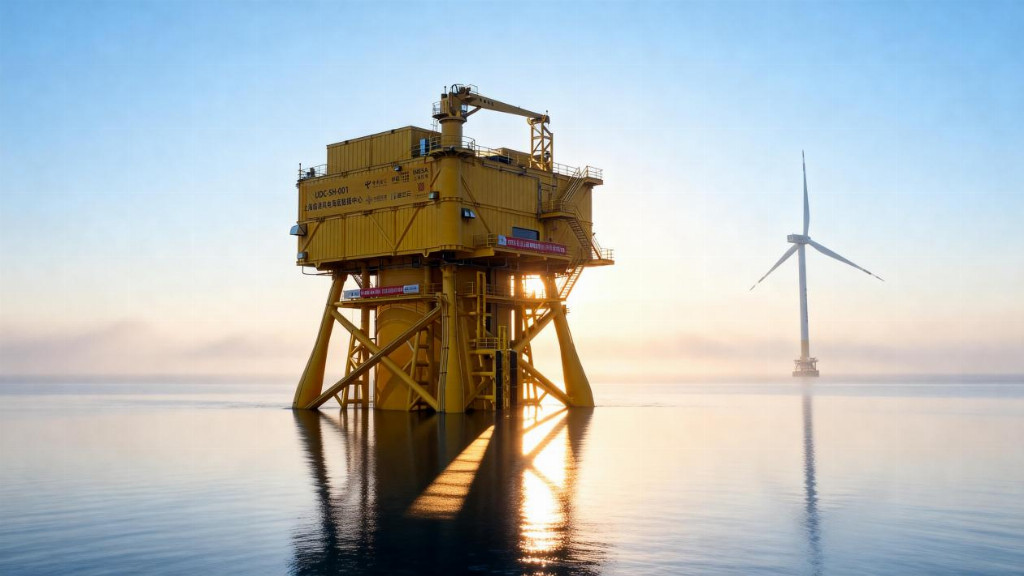
From the start of construction, to the completion of the main structure, and to the formal commissioning of the equipment, this "data heart" that has sunk deep into the sea has crossed waves and deep waters, completing the leap from conception to reality, marking an important breakthrough in the integrated development of artificial intelligence infrastructure, marine energy utilization, and marine engineering in China.
The Shanghai Lingang Underwater Data Center project has a total investment of 1.6 billion yuan and a total construction scale of 24 megawatts. It is planned to be built in two phases. The construction scale of the first phase demonstration project that has been put into use this time is 2.3 megawatts. The main construction content is to dismantle and rebuild the onshore centralized control center, build one vertical data cabin, and lay two 35 kV main submarine cables.
The project innovation adopts the dual technology integration of "offshore wind power direct connection+seawater natural cooling", deeply integrating ocean cooling, wind power supply, modular construction, and intelligent operation and maintenance, achieving the coordinated development of offshore green power and underwater computing power. The project design PUE (Power Usage Efficiency) is not higher than 1.15, and the green power supply rate exceeds 95%, providing a "Chinese solution" to solve the contradiction between the surge in computing power and energy shortage in the AI era.
World's first 'new design' to strengthen deep-sea fortress
As the first underwater data center in China to integrate "offshore wind power direct connection+seawater natural cooling" technology, this project has no precedent in design. The main body of the data center belongs to a large offshore structure, which needs to face various complex sea conditions such as strong winds and waves, high sediment content in the port area. Traditional design concepts are difficult to meet practical needs.
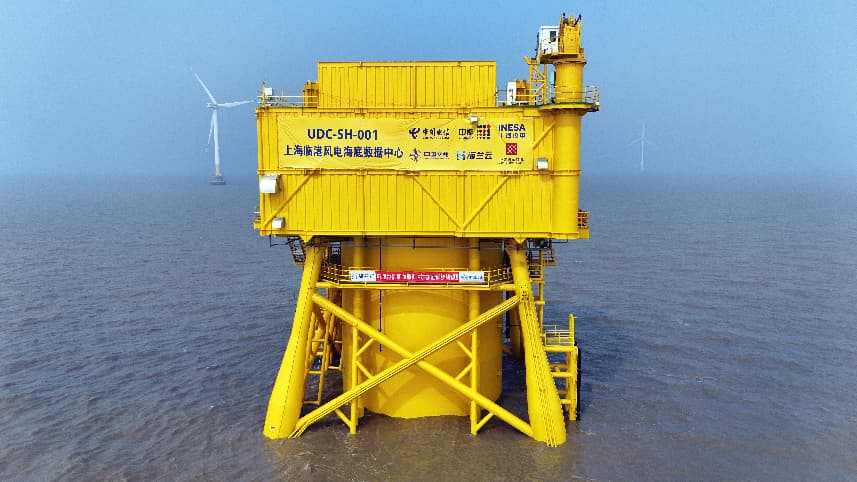
The design team of Sanhang is brave in innovation, breaking through conventions and pioneering the "new structure of underwater data center", which integrates and coordinates the four core parts of the upper module, pipeline frame, data cabin, and steel pipe piles.
In order to resist the impact of wind and waves from a physical structure, the design team innovatively changed the data cabin to a "cylindrical vertical structure type". This design not only expands the usable area of the data cabin from the inside, but also significantly reduces the impact of waves and improves the overall stability of the structure in wind and waves through the streamlined structure on the outside.
Striving for excellence in "new production" to forge a great national treasure
At the Qidong Base of the Third Navigation Bureau, a competition between space and high temperature is quietly unfolding inside a narrow cylinder with a diameter of only 14 meters. Measurement, positioning, assembly, welding, and multi-layer platform installation operations must not tolerate any deviation.
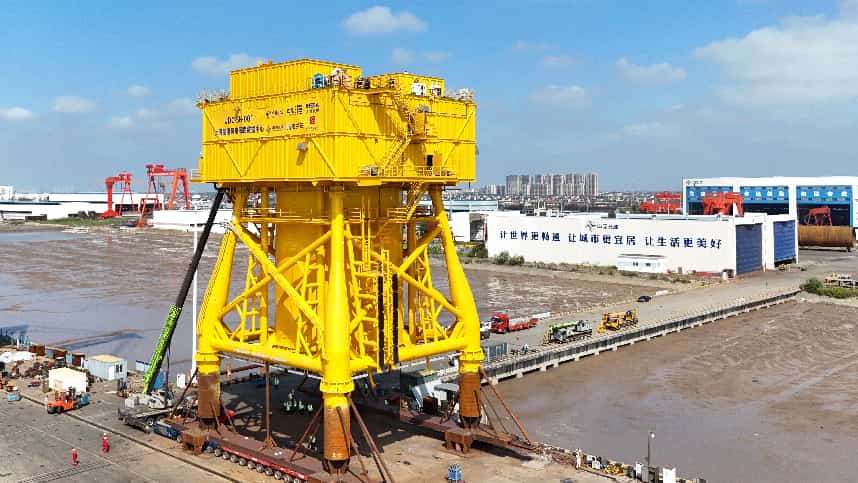
In the welding process of the conduit frame penetration, facing the challenges of multiple bends and narrow space, the construction and assembly team boldly attempted the "double person symmetrical welding" process. The two people stood at 180 degrees, synchronized current and welding speed, and the final one-time pass rate was as high as 98.6%. The weld seam was welded on one side and formed on both sides, perfectly flawless.
Typhoon Zhujiecao launched a surprise attack on the Yangtze River estuary, and the on-site commander of Qidong Base worked through the night to develop a "fully advanced technology+early deployment of protection" plan, using 3D modeling software to disassemble the structure and identify hidden dangers. After the weather warning is lifted, the team quickly enters the site and accurately completes the assembly, positioning, and welding. After two months of day and night fighting, this 39 meter high and over 1900 ton underwater computing "hardcore platform" has finally been completed and ready for production at the Qidong base dock.
Deep sea threading needle 'new installation' achieves precise positioning
At 4 o'clock in the morning, in the harbor waters about 10 kilometers away from the Shanghai coastline, the "data heart" slowly sank into the seabed, achieving precise docking with the underwater steel pipe piles! This is not an ordinary hoisting, but a 'deep-sea needle piercing' game against nature.
The data cabin was transported from Qidong base to Shanghai Lingang offshore wind farm, with a voyage of up to 220 kilometers. The transportation and installation team used a "saddle shaped" fixed support with thick rubber pads to prevent slipping, and supplemented it with 8 symmetrical cable wind ropes for reinforcement. 32 pieces of 12m long slant support steel pipes were welded at the jack of the jacket leg to build a stable rigid support system and ensure the absolute safety of the main structure of the data cabin in the bumpy sea.
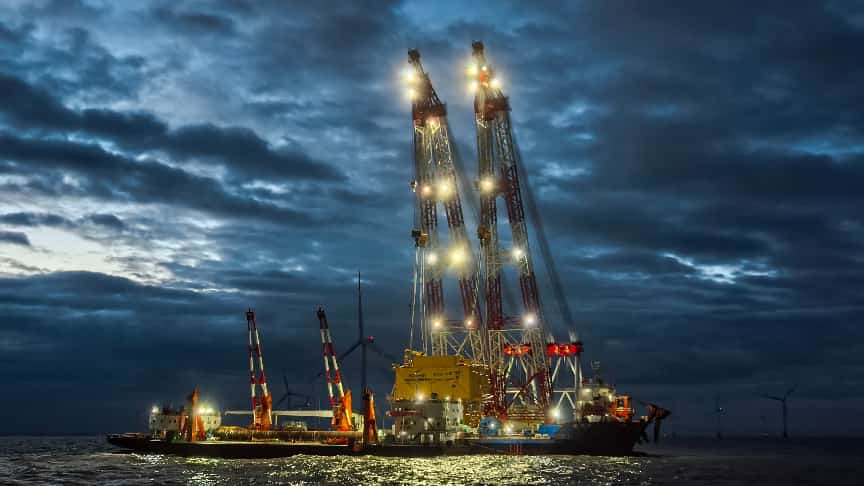
In the most critical offshore lifting process, facing the huge buoyancy changes of the data cabin entering the water and the need to insert the tip of the pipeline support leg into the underwater steel pipe pile, with a gap of only 0.18 meters and a deviation must be controlled within 10 centimeters, the project team relies on the excellent performance of the "Sanhang Fengfan" crane ship, guided by GPS and professional positioning software, and is commanded by the technical leader on site to strictly control the lowering speed at 0.1 meters per minute.
With the command, the main structure of the data cabin was stably inserted into the underwater steel pipe piles, achieving "zero deviation" and precise positioning.
From the implementation of drawings to the activation of the "data heart", the builders of CCCC fully leverage the advantages of ocean engineering, breaking through design barriers with the courage to be the first, maintaining the bottom line of quality with the perseverance of striving for excellence, and escorting deep-sea docking with the ingenuity of precise control. They have successfully created the world's first underwater data center that achieves "direct connection of offshore wind power+natural cooling of seawater".
Nowadays, the sea breeze drives the rotation of wind turbines, electricity is directly connected to data centers, and heat is quietly carried away by seawater. A picture of "green computing power cycle" is unfolding slowly on the coast of the East China Sea.