
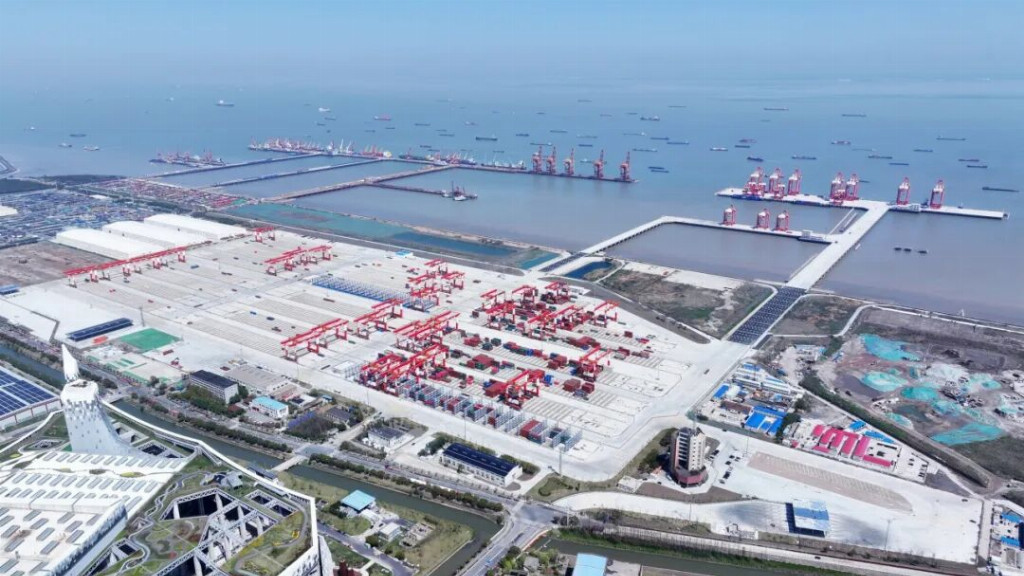
As the first systematic dock renovation project in China and an important component of Shanghai Port's "One Port, Eight Zones" initiative, the first phase of the Luojing Port Area dock renovation project has always adhered to the requirements of the "Yangtze River Protection" and "Dual Carbon" strategies since its launch, with the construction concept of "green, low-carbon, intelligent, and efficient", and integrating ecological friendliness throughout the entire construction process.
In the process of transforming a heavily polluted coal terminal into a fully automated and green container terminal, the project team has been guided by the principle of "minimizing environmental impact and maximizing resource recycling" from scheme design to resource utilization, from technology selection to waste disposal, promoting the transformation of the terminal from "traditional construction" to "green construction" and becoming a model for high-quality construction of water transportation engineering.
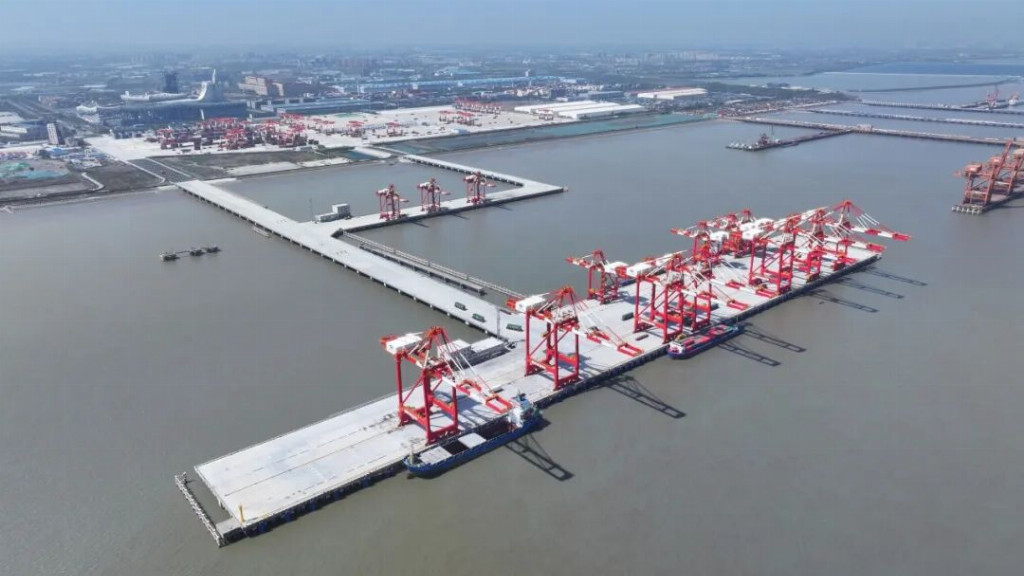
In response to the resource utilization difficulties in the renovation of the old dock, the project team has developed a graded plan of "demolition and reconstruction+renovation and utilization+in-situ reuse", innovatively applying the technology of using old concrete embankment backfilling to achieve a 70% utilization rate of the original structural resources of the dock. 30% of the waste generated from demolition, including concrete, steel bars, etc., is centrally crushed and converted into road beds and roadbed structural layers for the construction of new embankments, achieving zero external transportation of construction waste.
This practice not only reduces material costs by about 20%, but also helps the project win the "Shanghai Construction Engineering Green Construction Class I" award, and its recycling model has become a reference template for industry green transformation.
Faced with the construction challenge of "2571 pile foundations staggered and high risk of pile sinking", the project team solved the pain point with technological innovation, using laser scanning positioning technology, unmanned aerial vehicles, and unmanned ships to collect data on old piles. By integrating pile foundation parameters through BIM, precise positioning of pile sinking can be achieved. BIM modeling of ship machine anchor cable layout can avoid mutual interference, reduce safety hazards, and optimize water work space. The project team has successively applied 10 new technologies in the construction industry, including prefabricated concrete structure technology, green construction technology, and information technology, to promote the dual leap of construction efficiency and quality with new quality productivity.
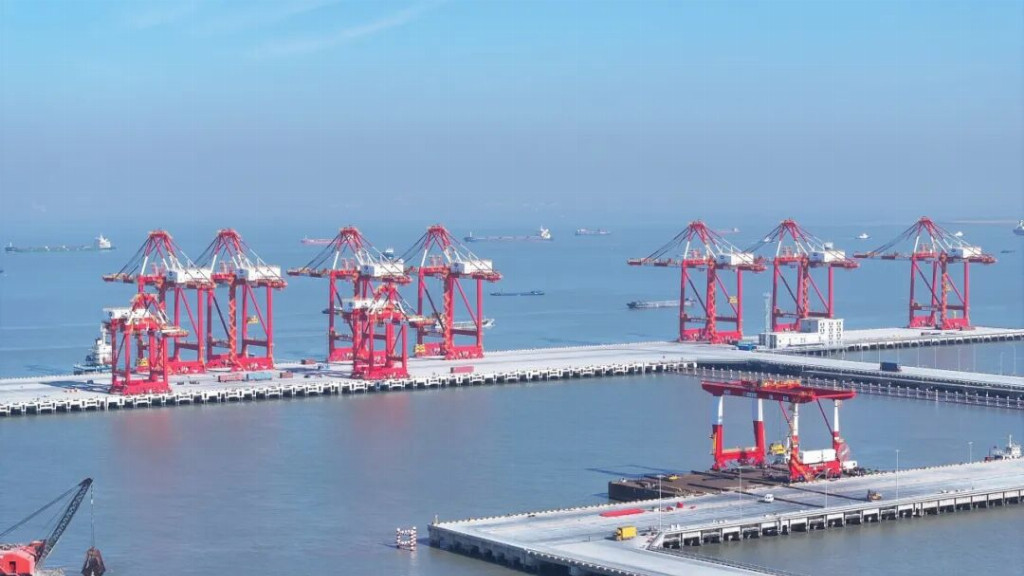
The completion of this project not only improves the container transportation layout of Shanghai Port, but also provides a replicable model for upgrading existing domestic ports through the "green transformation+innovative construction" model. (Wang Ruizhe, Third Navigation Bureau)